Sometimes you might like to know more about the origin of an image you've found on the web - or you might like to know if others are using images that you've uploaded, or if there are variations on a particular image, like Munch's scream. TinEye is a reverse image search engine, and claims to be "the first image search engine on the web to use image identification technology rather than keywords, metadata or watermarks."

Tuesday, November 10, 2009


Saturday, November 7, 2009
Wikimedia bookshelf project
Several strategies have been examined for improving the quality of Wikipedia. One is the vetting of user-contributed articles by qualified editors, a procedure explored by the German language wikipedia. Another is to make editing easier, and therefore more attractive to readers who may have something to contribute but are put off by the labor or technical difficulty of editing a page. Of course, that will encourage contributions from vandals and scholars alike, so the the new Wikimedia Bookshelf Project will employ a dual strategy; to simplify the editing process, but also attract more high-value Wikipedia editors through a focused public outreach program.
Monday, November 2, 2009
Previewing shortened urls
From the Joshmeister, a handy guide to previewing shortened urls.
Hat tip to Ildiko!
Hat tip to Ildiko!
Resource Shelf Resource of the Week: Frequently Requested Statistics on Immigrants and Immigration in the United States
A very thorough compendium of statistics on U.S. immigration. For an outstanding repository of information about the movement of people worldwide. see the main website of the Migration Policy Institute
Sunday, November 1, 2009
Tom Peters on the future

The article concludes with a rousing call for a Reader Bill of Rights: Because readers are the power base of libraries (as well as of bookstores and other organizations), we also can serve them well by articulating and advocating for their needs, desires, and interests. Authors, publishers, aggregators, and distributors are not the enemies of readers and libraries, but nature abhors a vacuum. If readers don't assert their rights in the dawning e-reading era, someone else will snatch up those rights. To that end, I suggest that libraries and library associations develop, promulgate, and defend a Reader Bill of Rights for the Digital Era. A "Reader Bill of Rights" doesn't strike me as a matter of great urgency, or something that libraries need to focus on; it seems more like a contrived ending to Peter's otherwise perceptive and interesting article, but more appropriate for an LJ cover story. A more logical conclusion points in the direction of obsolescence for libraries, but no reason to stop providing services as long as people find them useful.
Lbrary bypass to reach St. Jerome in his pajamas
John Esposito writes: I live 100 yards from a campus of the University of California, but cannot get remote access to the UC digital collection at any price. This situation won’t last; the pressure of a knowledge economy, coupled with the incentives of enterprise, will bring the riches of the world of information to my study. My PayPal account is ready.
 Esposito comments on Motoko Rich's recent NYT piece about ebooks and libraries which he says "raises the question of how publishers will come to terms with the possibility that the sale (or lease) of one copy of a book will lead to multiple readers of that copy." One answer is that epublishers will wish to bypass libraries altogether and reach their endusers - the "St. Jeromes in pajamas" - directly. But Esposito puts a library-positive spin on it: "A bypass strategy is a prudent means to find other ways to derive revenue from publications without imposing a further tax on a library’s strained materials budget."
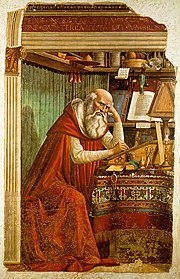 Esposito comments on Motoko Rich's recent NYT piece about ebooks and libraries which he says "raises the question of how publishers will come to terms with the possibility that the sale (or lease) of one copy of a book will lead to multiple readers of that copy." One answer is that epublishers will wish to bypass libraries altogether and reach their endusers - the "St. Jeromes in pajamas" - directly. But Esposito puts a library-positive spin on it: "A bypass strategy is a prudent means to find other ways to derive revenue from publications without imposing a further tax on a library’s strained materials budget."
Friday, October 30, 2009
Congressional 140

From Reagan's diary to Truman's journal, Lincoln's notes, and Kennedy's scribbling we are fascinated with the inner most thoughts of our national leaders during times of intense political discourse and national change. We look towards the unvarnished, un-spinned, raw, and truthful thoughts of the elected officials we have chosen to represent us in our American Republic as having more interpretive value then the highly sanitized speeches, releases, and talking points that strip away substance in favor of non-offensiveness.
Wednesday, October 28, 2009

Monday, October 26, 2009
Baker's Anthologist

Saturday, October 24, 2009
Excellent use of "costive"
The word "costive" was new to me - I was very delighted to discover it in this context:
from Intermezzo:
His opening Scriabin selections were cleverly juxtaposed so that he was able to run them together without any breaks. Unfortunately, this served mainly to expose the limitations in his expressive range, bathing everything in the same rhapsodic impressionistic gloss. His posture - head flung back, costive grimace - seemed more a substitute for real engagement than an expression of it.
Google document viewer
You can use Google Docs Viewer to generate a link for viewing documents online without leaving your browser.
Friday, October 23, 2009

Auto tune the news
Another installment in the Auto Tune the News series (#9). This one really swings...and what a great voice Hugo has! (thanks Ian)
Thursday, October 22, 2009
Ebooks libraries
A proposal from Teleread.org founder David Rothman; How e-Books Could Smarten Up Kids and Stretch Library Dollars: A National Plan
(excerpt)...But suppose a well-stocked national digital library system existed for Americans of different ages, along with the means to encourage schoolchildren and others to use it. Among those benefiting:
Students at small colleges without big budgets for either paper or electronic books.
Workers who want to upgrade job skills.
The elderly. In the future many baby boomers may face challenges of their own -- the inability to drive to the public library or read books of normal type size.
People in cash-strapped library and school districts.
With cost-savings in mind, a city council member in Los Angeles is already advocating e-books. "I just believe that with technology moving forward, we could save a great deal of money in not having to buy thousands of books each year when they could be made available online," a news account quotes Councilman Bernard Parks. He's off on some details, but yes, if nothing else, libraries shell out big bucks to store and manage paper collections. "E" could automate plenty.
Writers and publishers who are suffering from slumping book sales and could well stand a little economic stimulus, in the spirit of the old Federal Writers Project.
(excerpt)...But suppose a well-stocked national digital library system existed for Americans of different ages, along with the means to encourage schoolchildren and others to use it. Among those benefiting:
Students at small colleges without big budgets for either paper or electronic books.
Workers who want to upgrade job skills.
The elderly. In the future many baby boomers may face challenges of their own -- the inability to drive to the public library or read books of normal type size.
People in cash-strapped library and school districts.
With cost-savings in mind, a city council member in Los Angeles is already advocating e-books. "I just believe that with technology moving forward, we could save a great deal of money in not having to buy thousands of books each year when they could be made available online," a news account quotes Councilman Bernard Parks. He's off on some details, but yes, if nothing else, libraries shell out big bucks to store and manage paper collections. "E" could automate plenty.
Writers and publishers who are suffering from slumping book sales and could well stand a little economic stimulus, in the spirit of the old Federal Writers Project.
Wednesday, October 21, 2009
New York Times custom feeds
Check out the new New York Times Custom Feeds tool. An easy to use interface for creating keyword RSS feeds.
Area Eccentric Reads Entire Book
I missed this one when it originally appeared in The Onion, but delighted to discover it in Steven Johnson's anthology "Best Technology Writing of 2009".
Bookserver - disrtributed lending and vending over the Internet
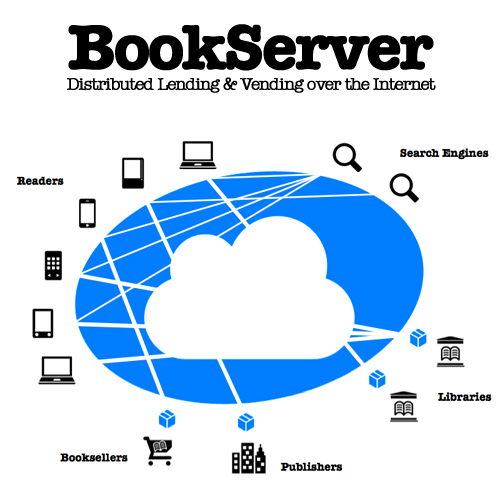
The widespread success of digital reading devices has proven that the world is ready to read books on screens.
As the audience for digital books grows, we can evolve from an environment of single devices connected to single sources into a distributed system where readers can find books from sources across the Web to read on whatever device they have. Publishers are creating digital versions of their popular books, and the library community is creating digital archives of their printed collections. BookServer is an open system to find, buy, or borrow these books, just like we use an open system to find Web sites.
The BookServer is a growing open architecture for vending and lending digital books over the Internet. Built on open catalog and open book formats, the BookServer model allows a wide network of publishers, booksellers, libraries, and even authors to make their catalogs of books available directly to readers through their laptops, phones, netbooks, or dedicated reading devices. BookServer facilitates pay transactions, borrowing books from libraries, and downloading free, publicly accessible books.
Who Benefits?
Authors find wider distribution for their work.
Publishers both big and small can distribute books directly to readers.
Book sellers find new and larger audiences for their products.
Device makers can offer access to millions of books instantly.
Libraries can continue to loan books in the way that patrons expect.
Readers get universal access to all knowledge.
Monday, October 19, 2009
Law.gov
Law.Gov "is an effort to create a report documenting exactly what it would take to create a distributed registry and repository of all primary legal materials in the United States.
By primary legal materials, we mean all materials that have the force of law and are part of the law-making process, including: briefs and opinions from the judiciary; reports, hearings, and laws from the legislative branch; and regulations, audits, grants, and other materials from the executive branch. Creating the system from open source software building blocks will allow states and municipalities to make their materials available as well."
By primary legal materials, we mean all materials that have the force of law and are part of the law-making process, including: briefs and opinions from the judiciary; reports, hearings, and laws from the legislative branch; and regulations, audits, grants, and other materials from the executive branch. Creating the system from open source software building blocks will allow states and municipalities to make their materials available as well."

Motoko Rich on digital loans, and ebooks and the brain

Motoko Rich discusses the implications of ebook loans for libraries and a panel of experts* in the New York Times Room for Debate ask whether the brain likes ebooks.
*Alan Liu, English professor
Sandra Aamodt, author, “Welcome to Your Brain”
Maryanne Wolf, professor of child development
David Gelernter, computer scientist
Gloria Mark, professor of informatics
Thursday, October 15, 2009
The Complete Review
If you're looking for a quick run-down of reviews of a new book, e.g. Ishiguro's short-story collection Nocturnes, The Complete Review is a very handy site. Here's an index of all the books currently under review at the Complete Review.
Wednesday, October 14, 2009
Article to video
Apropos of my my recent post about the transition from books to vooks and, ultimately, perhaps, the demise of text, I stumbled across something called the Article Video Robot. It takes tired old text and converts it to vibrant, compelling video. To try it out, I entered the text of a recent post here at Knowbodies about Wanting to want. See the ghastly end-product here. Of course, some might object, what can you expect, with "garbage in, garbage out"? So I tried again with a bit of real poetry...Larkin's The Trees. It didn't fare much better however...same lurid backdrop, same clumsy hybrid of spoken and written text, and same bass thumping in the background (Jaco P?). Sample it here (love that final message: "Philip Larkin is an 'Expert Author' and a well known expert in the Arts-and-Entertainment field.")
To be fair, these "article to video" services are not intended for bloggers or poets, but for article marketers (Article marketing - a genre new to me - "is a type of advertising in which businesses write short articles related to their respective industry"). But it's interesting to note that there are many such services - (just search for "article to video", e.g. www.videoarticlesecrets.com, www.article2video.com), and they all seem to share the conviction that showing/telling is a more effective way of getting a message across than writing. Is that necessarily true? Google seems to think so, and there is also a very compelling SEO rationale for marketers favoring video over text, explained with great urgency here.
Tuesday, October 13, 2009
Marcel and you
 If you're the sensitive, introspective kind of person who has answers to questions like "When and where were you happiest" and "If you could change one thing about yourself, what would it be?," you can fill out the same questionnaire that Marcel Proust responded to when he was 14 and 20, and see how you measure up. Questions like those were all the rage in 19th century Parisian salons - as they are on Facebook today - and during the past 16 years Vanity Fair has been "asking some of the most celebrated figures of our times to respond to this set of probing personal queries as a way of taking their psychic measure." I despise questions like that, and am far too out of touch with myself to respond with any sincerity, but gritted my teeth and forced my way through...and found that my responses most resemble those given by Allen Ginsberg, followed by Bill O'Reilly. ?
Sketch2photo
This is quite amazing...a taste of things to come
Sketch2Photo: Internet Image Montage from Tao Chen on Vimeo.
Friday, October 9, 2009
Compare state data with Datamasher
From the "about" page:
How do the States Compare? Mash up some government data to find out!
The Federal Government produces an immeasurable amount of data each day. DataMasher helps citizens have a little fun with those data by creating mashups to visualize them in different ways and see how states compare on important issues. Users can combine different data sets in interesting ways and create their own custom rankings of the states. Want to learn more? Watch this brief screencast.
How do the States Compare? Mash up some government data to find out!
The Federal Government produces an immeasurable amount of data each day. DataMasher helps citizens have a little fun with those data by creating mashups to visualize them in different ways and see how states compare on important issues. Users can combine different data sets in interesting ways and create their own custom rankings of the states. Want to learn more? Watch this brief screencast.
Google translate
Google squared, squared
Google squared was reviewed here a while ago, but today Google announced several important improvementsto the service. I built a square for "Norwegian American organizations" - not perfect, but still quite impressive! Try a search for something that lends itself to tabular presentation, e.g. "British composers," "marsupials," or "astronomers"
Monday, October 5, 2009
Want to be a respected scientist?
Although my publication in LRB was not everything I hoped it would be, it did nudge the old "perhaps I'm not just anybody, after all" nerve and whet my appetite for more recognition. With that in mind, I was very happy to stumble upon MIT's (no less!) Automatic CS Paper Generator. All you do is enter your own name along with the name of your co-scientists and MIT takes care of the content. Print it out as a handsome looking pdf, and off it goes to your favorite scientific journal for peer review. Ingenious, and what a time-saver!!!


Sunday, October 4, 2009
Swiss RapidShare is Pirate Bay for ebooks?
"Will books be Napsterized?" Randall Stross discusses an anticipated boom in e-book piracy that will accompany an anticipated boom in ebooks, and looks at the leading ebooks file-sharing site, Switzerland's RapidShare. I wonder - since this is a Swiss company - is there some way one could Napsterize the pharmaceutical industry? I keep thinking what a terrible shame it is that a great and noble idea like the Health Impact Fund doesn't seem to be going anywhere.
Subscribe to:
Posts (Atom)