

Friday, February 5, 2010
"That pregnant, mental pause of reading has come under threat like never before...."
Tell me about it, Alan Bisset. And bloggers and Twitterers and Facebookers are just too busy writing to read. In an article in Seed magazine, Denis Pelli and Charles Bigelow trace the explosive rate of authorship over the years, from 1400 to 2013 - when Twitter will have turned us all into published (defined as having a readership of 100) writers. As readers, we consume. As authors, we create. Our society is changing from consumers to creators. That has a nice ring to it, but if the creating comes at the expense of consuming - and talking/writing comes at the expense of listening/reading, then perhaps not. (Pelli/Bigelow reference from 3:17 a.m)


Tweetgrid

TweetGrid presents itself:
TweetGrid is a powerful Twitter Search Dashboard that allows you to search for up to 9 different topics, events, converstations, hashtags, phrases, people, groups, etc in real-time. As new tweets are created, they are automatically updated in the grid. No need to refresh the page!
For more, see the FAQ. This appears to be a very useful tool for following multiple topics (as many as 9) in real-time!
Is the iPad a game-changer for libraries?
The Radical Patron thinks so, and makes a compelling case. She urges us to "Check out the video below from Sports Illustrated to get a glimpse of what's to come in the next few years. Then, think about tablet devices in a few years when competitors have entered the market, features have been added, publishers have created richer content and prices have dropped." Gosh, it's pretty amazing stuff.
Wednesday, January 27, 2010
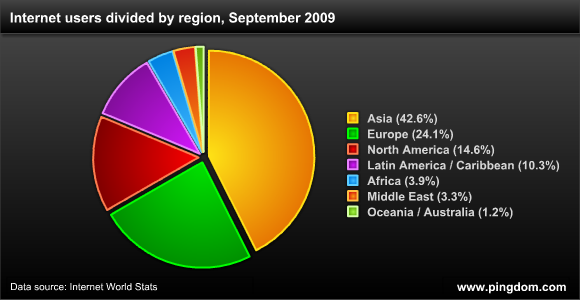
Internet 2009 in numbers
Friday, January 22, 2010
Most amazing libraries
I've already mentioned the recently unearthed library of Lemuel Gulliver, and now, courtesy of Kyle and the Huffington post, this slideshow of the World's Most Amazing Libraries.
(for Blogger bloggers only) Blogger pages
Finally:
Blogger now allows you to publish static information on stand-alone pages [no more than ten] linked from your blog. For example, you can use pages to create an About This Blog page that discusses the evolution of your blog, or a Contact Me page that provides directions, a phone number, and a map to your location.
I've skirted this problem by using Google sites for my external pages (e.g. the About this blog info at http://sites.google.com/site/aboutknowbodies/), but it's puzzling that Blogger.com hasn't offered this convenience until now - since they're owned by Google. Better late than never!
Blogger now allows you to publish static information on stand-alone pages [no more than ten] linked from your blog. For example, you can use pages to create an About This Blog page that discusses the evolution of your blog, or a Contact Me page that provides directions, a phone number, and a map to your location.
I've skirted this problem by using Google sites for my external pages (e.g. the About this blog info at http://sites.google.com/site/aboutknowbodies/), but it's puzzling that Blogger.com hasn't offered this convenience until now - since they're owned by Google. Better late than never!
Thursday, January 21, 2010
Librarian+Internet=Better Tomatos
Here's some excellent testimony from the agricultural sector about the value of libraries.
With the help of free Internet in the local library, a village in Ukraine has doubled its tomato production. The featured library received computer equipment and training through the Library Electronic Access Project administered by the U.S. Embassy in Ukraine. This video was created for the launch of the Bibliomist Global Libraries program, funded by the Bill & Melinda Gates Foundation and implemented by IREX.
Here's more about IREX and the Bibliomist project.
With the help of free Internet in the local library, a village in Ukraine has doubled its tomato production. The featured library received computer equipment and training through the Library Electronic Access Project administered by the U.S. Embassy in Ukraine. This video was created for the launch of the Bibliomist Global Libraries program, funded by the Bill & Melinda Gates Foundation and implemented by IREX.
Here's more about IREX and the Bibliomist project.
Friday, January 15, 2010
What words does China fear?
Censorship is sinister enough, but when exposed in this fashion it becomes mostly pathetic and embarrassing. I imagine many Chinese officials blushing.
(from digital inspiration)

(from digital inspiration)

Thursday, January 14, 2010

Nixon on incredibly atrocious modern art
For the most part beautifully put, but I assume he means recent "antics" not "addicts"


Wordle of 168 writers on edge

Wednesday, January 13, 2010
The Translation Gap: Why More Foreign Writers Aren’t Published in America
In a recent post on the year in translation, I asked, suggestively, whether the relatively small number of translated books in the U.S. market might indicate that American readers are culturally insulated or lacking curiosity about the outside world. I hoped not, and am happy to report that Emily Williams, in a longish article about The Translation Gap: Why More Foreign Writers Aren’t Published in America Her concludes: There are a number of explanations for this phenomenon, very few of which have to do with stereotypes of American readers as being culturally insulated or lacking curiosity about the outside world. That also reaffirms my view on the silliness of Horace Engdahl's remarks last year regarding the U.S. and the Nobel prize in literature. More on that topic in Lessons Learned and Not Learned at Quarterly Conversation.
A different kind of antidote to the notion of American insularity is the new (October 2009) Library of America volume Becoming Americans: Four Centuries of Immigrant Writing

from the LOA website:
"In his wide-ranging, expertly curated anthology, Becoming Americans, Ilan Stavans collects four centuries of immigrants' stories, laying the works of comparative newcomers like Eva Hoffman, Felipe Alfau and Gary Shteyngart alongside the writing of early settlers, from religious dissidents fleeing persecution to slaves like Phillis Wheatley and Ayuba Suleiman Diallo.... Stavans' anthology goes a long way toward contemplating the breadth of the American immigrant experience. For every tragic story collected here, there is one of joyful liberation or of perplexed amazement or, more commonly, of excitement followed by a long, slow adjustment tinged with hope, fear and regret."—Maud Newton, NPR
A different kind of antidote to the notion of American insularity is the new (October 2009) Library of America volume Becoming Americans: Four Centuries of Immigrant Writing

from the LOA website:
"In his wide-ranging, expertly curated anthology, Becoming Americans, Ilan Stavans collects four centuries of immigrants' stories, laying the works of comparative newcomers like Eva Hoffman, Felipe Alfau and Gary Shteyngart alongside the writing of early settlers, from religious dissidents fleeing persecution to slaves like Phillis Wheatley and Ayuba Suleiman Diallo.... Stavans' anthology goes a long way toward contemplating the breadth of the American immigrant experience. For every tragic story collected here, there is one of joyful liberation or of perplexed amazement or, more commonly, of excitement followed by a long, slow adjustment tinged with hope, fear and regret."—Maud Newton, NPR
168 writers on edge
Edge.org has invited 168 more and less prominent writers/thinkers to comment on the question: How has internet changed the way you think?
Here are contributors in alphabetical order, with links to their contributions:
Anthony Aguirre
Alan Alda
Alun Anderson
Chris Anderson
Noga Arikha
Scott Atran
Mahzarin R. Banaji
Albert-László Barabási
Simon Baron-Cohen
Samuel Barondes
Thomas A. Bass
Yochai Benkler
Jesse Bering
Jamshed Bharucha
Sue Blackmore
Paul Bloom
Giulio Boccaletti
Stefano Boeri
Lera Boroditsky
Nick Bostrom
Stewart Brand
John Brockman
Rodney Brooks
David M. Buss
Jason Calacanis
William Calvin
Philip Campbell
Nicholas Carr
Sean Carroll
Leo Chalupa
Nicholas Christakis
George Church
Andy Clark
June Cohen
Tony Conrad
Douglas Coupland
James Croak
M. Csikszentmihalyi
Fiery Cushman
David Dalrymple
Richard Dawkins
Aubrey De Grey
Stanislas Dehaene
Daniel Dennett
Emanuel Derman
Keith Devlin
Peter Diamandis
Chris DiBona
Eric Drexler
Jesse Dylan
Esther Dyson
George Dyson
David Eagleman
Olafar Eliasson
Brian Eno
Juan Enriquez
Daniel Everett
Paul Ewald
Hu Fang
Christine Finn
Eric Fischl
Helen Fisher
W. Tecumseh Fitch
Richard Foreman
Howard Gardner
David Gelernter
Neil Gershenfeld
Ralph Gibson
Gerd Gigerenzer
Ian & Joel Gold
Nigel Goldenfeld
Alison Gopnik
April Gornik
Joshua Greene
Haim Harari
Judith Rich Harris
Sam Harris
Daniel Haun
Marc Hauser
Marti Hearst
Virginia Heffernan
W. Daniel Hillis
Donald Hoffman
Bruce Hood
Nick Isaac
Xeni Jardin
Paul Kedrosky
Kevin Kelly
Jon Kleinberg
Brian Knutson
Terence Koh
Stephen Kosslyn
Kai Krause
Andrian Kreye
Jaron Lanier
Joseph LeDoux
Andrew Lih
Seth Llloyd
Gary Marcus
Lynn Margulis
John Markoff
Tom McCarthy
Jonas Mekas
Thomas Metzinger
Geoffrey Miller
Dave Morin
Evgevny Morozov
David Myers
Tor Nørretranders
Hans Ulrich Obrist
James O'Donnell
Tim O'Reilly
Gloria Origgi
Neri Oxman
Mark Pagel
Gregory Paul
Irene Pepperberg
Clifford Pickover
Stuart Pimm
Steven Pinker
Ernst Pöppel
Emily Pronin
Robert Provine
Steve Quartz
Lisa Randall
Martin Rees
Ed Regis
Howard Rheingold
Matt Ridley
Matthew Ritchie
Rudy Rucker
Douglas Rushkoff
Karl Sabbagh
Paul Saffo
Scott D. Sampson
Larry Sanger
Robert Sapolsky
Roger Schank
Peter Schwartz
Charles Seife
Terrence Sejnowski
Robert Shapiro
Michael Shermer
Clay Shirky
Barry Smith
Laurence Smith
Lee Smolin
Galia Solomonoff
Linda Stone
Seirian Sumner
Tom Standage
Victoria Stodden
Nassim Taleb
Timothy Taylor
Max Tegmark
Frank Tipler
Fred Tomaselli
John Tooby
Arnold Trehub
Sherry Turkle
Eric Weinstein
Ai Weiwei
Frank Wilczek
Ian Wilmut
Eva Wisten
Richard Saul Wurman
Anton Zeilinger
Here are contributors in alphabetical order, with links to their contributions:
Anthony Aguirre
Alan Alda
Alun Anderson
Chris Anderson
Noga Arikha
Scott Atran
Mahzarin R. Banaji
Albert-László Barabási
Simon Baron-Cohen
Samuel Barondes
Thomas A. Bass
Yochai Benkler
Jesse Bering
Jamshed Bharucha
Sue Blackmore
Paul Bloom
Giulio Boccaletti
Stefano Boeri
Lera Boroditsky
Nick Bostrom
Stewart Brand
John Brockman
Rodney Brooks
David M. Buss
Jason Calacanis
William Calvin
Philip Campbell
Nicholas Carr
Sean Carroll
Leo Chalupa
Nicholas Christakis
George Church
Andy Clark
June Cohen
Tony Conrad
Douglas Coupland
James Croak
M. Csikszentmihalyi
Fiery Cushman
David Dalrymple
Richard Dawkins
Aubrey De Grey
Stanislas Dehaene
Daniel Dennett
Emanuel Derman
Keith Devlin
Peter Diamandis
Chris DiBona
Eric Drexler
Jesse Dylan
Esther Dyson
George Dyson
David Eagleman
Olafar Eliasson
Brian Eno
Juan Enriquez
Daniel Everett
Paul Ewald
Hu Fang
Christine Finn
Eric Fischl
Helen Fisher
W. Tecumseh Fitch
Richard Foreman
Howard Gardner
David Gelernter
Neil Gershenfeld
Ralph Gibson
Gerd Gigerenzer
Ian & Joel Gold
Nigel Goldenfeld
Alison Gopnik
April Gornik
Joshua Greene
Haim Harari
Judith Rich Harris
Sam Harris
Daniel Haun
Marc Hauser
Marti Hearst
Virginia Heffernan
W. Daniel Hillis
Donald Hoffman
Bruce Hood
Nick Isaac
Xeni Jardin
Paul Kedrosky
Kevin Kelly
Jon Kleinberg
Brian Knutson
Terence Koh
Stephen Kosslyn
Kai Krause
Andrian Kreye
Jaron Lanier
Joseph LeDoux
Andrew Lih
Seth Llloyd
Gary Marcus
Lynn Margulis
John Markoff
Tom McCarthy
Jonas Mekas
Thomas Metzinger
Geoffrey Miller
Dave Morin
Evgevny Morozov
David Myers
Tor Nørretranders
Hans Ulrich Obrist
James O'Donnell
Tim O'Reilly
Gloria Origgi
Neri Oxman
Mark Pagel
Gregory Paul
Irene Pepperberg
Clifford Pickover
Stuart Pimm
Steven Pinker
Ernst Pöppel
Emily Pronin
Robert Provine
Steve Quartz
Lisa Randall
Martin Rees
Ed Regis
Howard Rheingold
Matt Ridley
Matthew Ritchie
Rudy Rucker
Douglas Rushkoff
Karl Sabbagh
Paul Saffo
Scott D. Sampson
Larry Sanger
Robert Sapolsky
Roger Schank
Peter Schwartz
Charles Seife
Terrence Sejnowski
Robert Shapiro
Michael Shermer
Clay Shirky
Barry Smith
Laurence Smith
Lee Smolin
Galia Solomonoff
Linda Stone
Seirian Sumner
Tom Standage
Victoria Stodden
Nassim Taleb
Timothy Taylor
Max Tegmark
Frank Tipler
Fred Tomaselli
John Tooby
Arnold Trehub
Sherry Turkle
Eric Weinstein
Ai Weiwei
Frank Wilczek
Ian Wilmut
Eva Wisten
Richard Saul Wurman
Anton Zeilinger
Tuesday, January 12, 2010
Baker's delight

One unnamed “prominent media executive” leaned toward Auletta at the 2007 Google Zeitgeist Conference and whispered a rhetorical question in his ear: What real value, he wanted to know, was Google producing for society?
Wait. What real value? Come now, my prominent executive friend. Have you not glanced at Street View in Google Maps? Have you not relied on the humble aid of the search-box calculator, or checked out Google’s movie showtimes, or marveled at the quick-and-dirtiness of Google Translate? Have you not made interesting recherché 19th-century discoveries in Google Books? Or played with the amazing expando-charts in Google Finance? Have you not designed a strange tall house in Google SketchUp, and did you not make a sudden cry of awed delight the first time you saw the planet begin to turn and loom closer in Google Earth? Are you not signed up for automatic Google News alerts on several topics? I would be very surprised if you are not signed up for a Google alert or two.
Monday, January 11, 2010
Nicholson Baker's curiosity
I try to link to everything by or about Nicholson Baker, including his recent reviewof Auletta's book about Google and this fine verbiage from Snarkmarket that sums up what makes Baker great; it's that big ol' curiosity.
"And it’s notable because so many of the spot-on assessments of new media, culture and technology have come, lately, from Nicholson Baker. Nicholson Baker on Wikipedia. Nicholson Baker on the Kindle. He’s neither a booster nor a troll; he seems to approach it all with curiosity—the curiosity of an actual user, no small thing—and amusement. And he’s always surprising. This is Nicholson Baker, the guy who wrote about “the assault on paper.” And he’s “fond of Google”? Why, sure. He’s a thinker, not a pundit; a working brain, not a billboard hawking the same idea, over and over."
"And it’s notable because so many of the spot-on assessments of new media, culture and technology have come, lately, from Nicholson Baker. Nicholson Baker on Wikipedia. Nicholson Baker on the Kindle. He’s neither a booster nor a troll; he seems to approach it all with curiosity—the curiosity of an actual user, no small thing—and amusement. And he’s always surprising. This is Nicholson Baker, the guy who wrote about “the assault on paper.” And he’s “fond of Google”? Why, sure. He’s a thinker, not a pundit; a working brain, not a billboard hawking the same idea, over and over."
Friday, January 8, 2010
U.S Code free online
from Open Jurist
Introducing the United States Code on OpenJurist
OpenJurist is growing! You can now access the United States Code on OpenJurist. Our integration is not complete yet, but the US Code is available so we wanted to make it accessible. Please let us know what you think by emailing us here: openjurist - at - gmail - dot - com. It will take Google a little while to make it searchable, but in the mean time if you know the section you need you can navigate your way there.
Find the United States Code, here: http://openjurist.org/united-states-code
Introducing the United States Code on OpenJurist
OpenJurist is growing! You can now access the United States Code on OpenJurist. Our integration is not complete yet, but the US Code is available so we wanted to make it accessible. Please let us know what you think by emailing us here: openjurist - at - gmail - dot - com. It will take Google a little while to make it searchable, but in the mean time if you know the section you need you can navigate your way there.
Find the United States Code, here: http://openjurist.org/united-states-code
Thursday, January 7, 2010
Spreadsheet fiction
The Millions has posted an update (for 2009) on Frank Kovarik's interesting New Yorker fiction spreadsheet data.
See also Kovarik's blog (not confined to literature) "Corresponding Fractions"
See also Kovarik's blog (not confined to literature) "Corresponding Fractions"
Tuesday, January 5, 2010
Cartoonify yourself!
This ad keeps turning up all over the place....or is it something about my web-behavior that's attracting it? On many levels, it captures nicely what the social web is all about. Get with it and cartoonify yourelf! Make it real!


Tuesday, December 29, 2009
The year in translation
Three percent "a resource for international literature at the University of Rochester" and named after the oft-cited statistic (first established by Bowker) that only 3% of books published in the U.S. are translations, offers an overview of the year in translation, including a 2009 translation spreadsheet of the original fiction and poetry translations released in the U.S. during 2009.
In translations by country of origin, France tops the list, accounting for 32, or 9.2%, of 348 translations, while Spanish is the most translated language with 59 titles. 11 Norwegian titles in translation were released in the U.S. market in 2009 - the same number as lil'old Russia (lots of space and people, but evidently lacking in significant writers and literary tradition) and 1 more than measly China.
Three percent more than suggests that translations are a measure of a reading nations' insularity: The motivating force behind the website is the view that reading literature from other countries is vital to maintaining a vibrant book culture and to increasing the exchange of ideas among cultures. In this age of globalization, one of the best ways to preserve the uniqueness of cultures is through the translation and appreciation of international literary works. To remain among the world’s best educated readers, English speakers must have access to the world’s great literatures. It is a historical truism and will always remain the case that some of the best books ever written were written in a language other than English.
According to statistics compiled by the Norwegian publishers association 279 adult fiction titles were translated into Norwegian in 2008, along with 333 titles for children. In both categories, the number of translations exceeded the number of original Norwegian titles (275 and 233 respectively). Naturally, translations will be comparatively more numerous in nations of minor languages, but these are still striking figures: 279 titles for a population of under 5 million, as compared with 348 translations for a U.S. population of more than 300 million.
In translations by country of origin, France tops the list, accounting for 32, or 9.2%, of 348 translations, while Spanish is the most translated language with 59 titles. 11 Norwegian titles in translation were released in the U.S. market in 2009 - the same number as lil'old Russia (lots of space and people, but evidently lacking in significant writers and literary tradition) and 1 more than measly China.
Three percent more than suggests that translations are a measure of a reading nations' insularity: The motivating force behind the website is the view that reading literature from other countries is vital to maintaining a vibrant book culture and to increasing the exchange of ideas among cultures. In this age of globalization, one of the best ways to preserve the uniqueness of cultures is through the translation and appreciation of international literary works. To remain among the world’s best educated readers, English speakers must have access to the world’s great literatures. It is a historical truism and will always remain the case that some of the best books ever written were written in a language other than English.
According to statistics compiled by the Norwegian publishers association 279 adult fiction titles were translated into Norwegian in 2008, along with 333 titles for children. In both categories, the number of translations exceeded the number of original Norwegian titles (275 and 233 respectively). Naturally, translations will be comparatively more numerous in nations of minor languages, but these are still striking figures: 279 titles for a population of under 5 million, as compared with 348 translations for a U.S. population of more than 300 million.
Free Technology for Teachers
I woke from troubled sleep this morning berating myself for neglecting to nominate the superb Free Technology for Teachers for the Edublogs 2009 awards. Rushed over to see if it was too late, which it was, but no matter...many others confirmed my excellent judgment and voted Free Technology for Teachers as the best individual educational blog for 2009. Congratulations!
Saturday, December 26, 2009
The worst books
Pleased to see Vernon God Little picking up several endorsements in this contest by The Guardian.
Thursday, December 17, 2009

Preview new NYPL site
A video showing the new NYPL site (and three cheers for the absence of music!)
Access myLibrary for iPhone
The iPhone/GPS app AccessMyLibrary from Gale will point you to libraries within a 10-mile radius of your location. (libraries that do not subscribe to a Gale product are not shown, however). You can then select a library and obtain access to all its Gale electronic resources. You can also use this app to find the address or to contact the[Gale subscribing] library in your area directly. See a thorough review/explanation at Resource Shelf.



Wednesday, December 16, 2009
Empowering the peanut gallery
Alan Jacobs at Text Patterns makes the brazen claim that concentration and distraction are incompatible entities. Actually that thought had occurred to me also, but I wrote it off to old age. Jacobs provides some good references on this topic, and his post is followed by a string of interesting comments. The Chronicle of Higher Education discussed this phenomenon recently in Teaching with Twitter: Not for the Faint of Heart - which is actually more about occupational health than higher education. In the video below, an enthusiastic faculty member notes that he now hears from students who were once to shy to speak up in class; once again, technology levels the playing field, this time taking away that unfair advantage formerly enjoyed by ventriloquists. See also my earlier post about backchanneling.

Friday, December 11, 2009
An outstanding Christmas decoration

A truly outstanding Christmas decoration! And testimony by the anonymous prankster about the response to this lifesize yuletide ornament (read it at Traveling Librarian) inspires faith in the goodness of mankind!
Letters of Note

What an attractive and interesting blog Letters of Note is! Here's the "about" blurb:
Letters of Note is an attempt to gather and sort fascinating letters, postcards, telegrams, faxes, and memos. Scans/photos where possible. Fakes will be sneered at. Updated every weekday.
Translation
For those interested in translations and the art of translation, The Quarterly Conversation has assembled "Translate this book"
We’ve talked to some of the top translators into English working today; we’ve talked to publishers big and small; we’ve talked to agents, journalists, and foreign-language authors. We’ve asked them all for the best books that still aren’t in English. And have they responded. They’ve told us TRANSLATE THIS BOOK!, and now we pass that on to you.
We’ve talked to some of the top translators into English working today; we’ve talked to publishers big and small; we’ve talked to agents, journalists, and foreign-language authors. We’ve asked them all for the best books that still aren’t in English. And have they responded. They’ve told us TRANSLATE THIS BOOK!, and now we pass that on to you.
Google real time search
A few months ago, Google introduced a new feature that lets you limit search results to items added during the past 24 hours. Now they've also added a "latest" feature, that lets you filter down to items added during the past minutes and seconds. Very cool, and a useful supplement to Twitter and realtime search engines. Here's a demo video - without narration, but with annoying music, so turn your speaker off (why do so many videos come with this kind of useless music? Silence is golden.)
Subscribe to:
Posts (Atom)