 |
| Harry Campbell |

Monday, September 27, 2010
Small change, net effect


Sunday, September 26, 2010
White House blog: Libraries: A Place Where Stories are Told, Knowledge is Gained, and Economies are Built
Agriculture Tom Vilsack has announced American Recovery and Reinvestment Act funding to assist 129 rural libraries in 30 states to create, expand, and improve the nation’s rural libraries – benefitting over 1.7 million rural residents. These investments, he writes on the White House blog, are putting Americans back to work managing and designing the projects, constructing new facilities, and installing computer systems.
Instant filth
Following up my recent post about Google Instant's lecherous imagination, here's a list of some forbidden search terms
Writer interviews from Paris Review
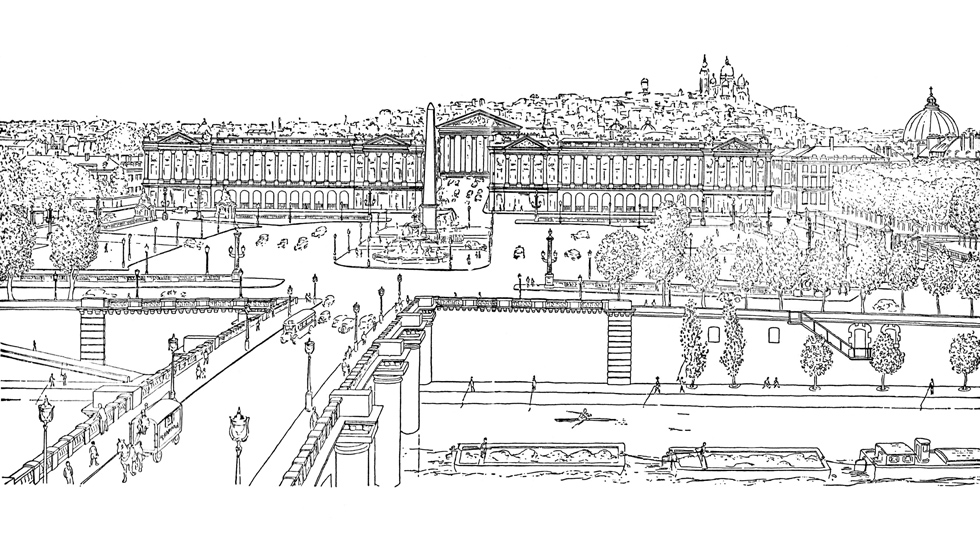
The Paris Review's enormous collection of writer interviews, alphabetically or by decade. See also BBC's collection.
Friday, September 24, 2010
Tuesday, September 21, 2010


Friday, September 17, 2010
"Amid the many gradations of melancholy...the public library"
Profile of the Chicago public library system and Obama's newly announced Educate to Innovate campaign. The initiative includes plans to create 30 youth learning laboratories in libraries and museums nationwide. The laboratories are inspired by YOUmedia, a staple of the Harold Washington Library Center in Chicago which is the nation’s largest library.
Sunday, September 12, 2010
Small is beautiful
Small is beautiful...and also hideous. Nikon's Small World small photomicrography competition. Gerd Guenther's "Soap Film" (below) is currently in the lead....you can cast your vote here.

Google has a dirty mind
Google Instant's suggestiveness does not extend to sex. Phil Bradley discovered this when searching for (he swears) "nudge," a concept I've blogged about previously (ironically, Google Instant's auto-suggestion technology is itself an excellent example of "nudge" in action). Evidently the filth-minded search engine was one step ahead of Phil, and was thinking "nude." Where some humans might blush, prudish Google blanches - try searching for "fuchsia", and see how Google Instant - aka. the annoying kid in the front row who always has his hand up - immediately clams up and turns white when you add "c" after "fu." Pretty funny.


Friday, September 10, 2010
Friday, September 3, 2010
"antihuman software like Facebook"
Windmill tilting like this article by Lanier - or Socrates's alleged resistance to writing - is futile, but interesting nonetheless, and sometimes even rousing. Adam Thierer has compiled a rather thorough overview of recent technophile and -phobe writings here.
Sunday, August 29, 2010

Thursday, August 26, 2010


Every Time Zone
Everytimezone.com is an ingenious tool for visualizing time zone differences, and very useful if you need to set up a conference call or teleconference with participants in far flung parts of the world.
Wednesday, August 25, 2010
Craft your very own academic sentences!
With this ingenious application from the University of Chicago Writing Program, you can write academic sentences (e.g. "The epistemology of praxis recapitulates the historicization of linguistic transparency.") with the best of them.
Tuesday, August 24, 2010
Mark Twain at Duino Castle

Mark Twain's responses to a guestbook questionnaire at Duino Castle, on display in the Castle museum. Twain visited Duino in May, 1899, while staying in Nuremberg. 12 years later, between October 1911 and May 1912, Rilke would stay there and find inspiration for his Duino Elegies. Twain's responses to the questionnaire are as follows:
Name and position
Mark Twain
(geb. S.L. Clemens)
Ambassador at large U.S.A.
(self-appointed)
Staying at/date
Nürnberg, May 29, 1899
Motto
The ornament of a house is the friends who frequent it
-Emerson
Highest wish
That I may pass for what I ought to be, not what I am
Favorite author or composer
Kipling
Favorite flower
Forget-me-not
Lifelong occupation
Embroidery
Worst habit
Das Rauchen [ie. smoking]
Greatest dislike
Getting up
Favorite book
The Jungle Books
Favorite poem
Omar's Rubaiyat
(Fitzgerald's)
Favorite color
Old gold (22 karat)
Favorite drink
Pure water, adulterated with Scotch whisky
p.s -In 1897, Twain spoke to the Concordia Press Club in Vienna in German, amusing his audience with the speech "Die Schrecken der deutschen Sprache" ("The Horrors of the German Language") For readers with even a rudimentary familiarity with German, Twain's literal translation of the speech into English is equally hilarious.
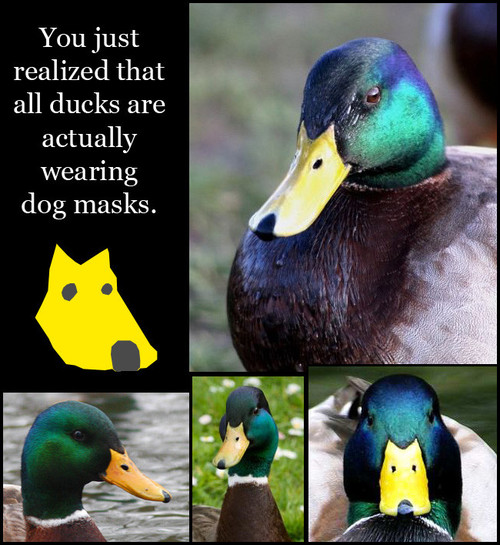
Wonders of evolution: mallards win human affection with dog masks
Evolution truly is mind-boggling; note how mallards have developed cute "dog masks" to win the affection of humans. And speaking of evolution, and the development of such ingratiating traits, Dr. Richard Dawkins has a trick or two up his sleeve also...

Wednesday, August 18, 2010
British writers in their own words

Monday, August 16, 2010
Book google, and pool shaped kidneys
Urban Dictionary, which is not concerned with grammar, defines "book google" as "When you need to figure out something, so you look it up in a book, like in the olden times, when dinosaurs ruled the earth." Does this phenomenon have a name? Another example: in Amazons, Don Delillo talks about "swimming pool shaped kidneys."
Cavalcade of Time Magazine's 83 covergirls and -boys

Sunday, August 15, 2010
Friday, August 13, 2010
Social Media Analytics


Thursday, August 12, 2010
New Knowledge Environments, Vol.1, No.1

"New Knowledge Environments is a peer-reviewed scholarly journal and open community archive for those engaged in exploring and understanding the nature of text-oriented communication in the past, present, and future." Inaugural issue is Research Foundations for Understanding Books and Reading in the Digital Age.
Elsekiss thou may mean Kerry piggy?
Many years ago Professor Bjørn Tysdahl wrote an interesting article about James Joyce's use of Norwegian in Finnegans Wake. Joyce had several Norwegian teachers when he lived in Paris during the 20s, and one of them was the great Norwegian poet Olaf Bull. The mellifluous question (Finnegans Wake is uncommonly mellifluous, if not intelligible, as I've noted here and there) "Elsekiss thou may mean Kerry piggy?" is surely a Joycean rendition of "Elsker du mig, min kære pige" (Do you love me, my dear girl?) - and perhaps an echo of Bull's poem "Smerte" (Pain), which concludes "Min elskede - elsker du mig? (My love, do you love me?)
Subscribe to:
Posts (Atom)