
Wednesday, June 28, 2006
Digital library cards
Kevin Kelly's article about accessing librry databases from home is a timely reminder than information doesn't really want to be free, and that even in the most wired societies, a public library is a wonderful service.


Tuesday, June 27, 2006
Genealogy resource
Although it is a fee-based service, Ancestry.com's digitization of the entire U.S. Federal Census from 1790-1930 might be useful to know about when turning away genealogists in a helpful manner. See also the Wall Street Journal article (06/22/06), "New Ways to Dig For Your Roots Online" Thanks to beSpacific for both of these tips.
Sunday, June 18, 2006
Virtual Library Cat
Ernster the Virtual Library Cat at the Hofstra School of Law has a blog where s/he provides library related "News and Views from Ernster, the Deane Law Library Virtual Cat." See this cat's rss feed among the feeds in the left hand column.
Eigen's Political and Historical Quotations
Eigen's Political & Historical Quotations is, by its own account, "the world's largest collection of memorable quotes about and by historians, politicians and other public figures. The collection is designed for the use of students, journalists, teachers, historians, political scientists and the many other people who are interested in politics and political history."
Wednesday, June 14, 2006
and another....
When it rains it pours...Ralph just alerted me to another great source, this portal to "Free Images on the Web: Photos and Paintings", from the Merriam Library, California State University at Chico. Thanks Ralph!
Good source for free photos

The USDA's Online Photography Center is a wonderful source for U.S. photos that are in the public domain and may be used free of charge. Also includes a "DC landmarks" section, which is great for publishers, journalists, and others who are looking for images representing the U.S. government.
New Pew Report
A new report from the Pew Global Attitudes Project shows renewed decline of the American image abroad: "A year ago, anti-Americanism had shown some signs of abating, in part because of the positive feelings generated by U.S. aid for tsunami victims in Indonesia and elsewhere. But favorable opinions of the United States have fallen in most of the 15 countries surveyed."
Tuesday, June 13, 2006
Public Conversations
The Public Conversations Project asks "How can political or ideological adversaries engage in constructive conversations despite conflicting values and worldviews?" - a familiar challenge! The guide"Fostering Dialog Across Divides" offers advice to diplomats and others who seek an alternative to the "we're right, you're wrong" approach.
ESL resource, UsingEnglish.com
UsingEnglish.com is a handy site for teachers and others interested in English as a second language. Note also Stewart Clark's site, English Matters
State of the Union Concordance
http://stateoftheunion.onetwothree.net/ This site uses a "tag cloud" to show word frequencies in all State of the Union messages since 1790. A goldmine for anyone interested in the development of rhetoric and content in the SOU during the past 200 years.
Thursday, June 8, 2006
NationMaster.com
Came across a review of this statistical web site in CHOICE (June 2006, p. 1808), and it does seem rather useful. CHOICE rates it as "essential": "What sets NationMaster apart from other statistical Web-based databases are its numerous reliable sources and its visual presentation of statistics." Sources include CIA's World Fact Book, the United Nations and the World Health Organization.
http://www.nationmaster.com/index.php
http://www.nationmaster.com/index.php
Thursday, May 25, 2006
Stumpers-l and project wombat
The old stumpers-l list, for all conceivable reference questions, has been reborn as project wombat, with some useful new features.
Thursday, May 18, 2006
Pew on PD
A new book from the Pew Institute, America Against the World, paints a bleak picture of the U.S. image around the world; interviews of more than 90,000 people in 50 countries over a four-year time span suggest that anti-American sentiment now extends beyond U.S. leadership and foreign policies to Americans themselves. Some reviews: Newhouse News, IHT, New America Foundation, CSM, Foreign Affairs See also co-author Kohut's testimony on this issue in the House last November.
Friday, May 12, 2006
Exotic library jobs
I think my job is fairly interesting and unusual as far as library jobs go, but it surely doesn't compete with the Camel Mobile Library of Kenya!
Thursday, May 11, 2006
Another fun tool

The Newspaper Snippet Generator is a fun tool that bears some resemblance to the Einstein blackboard tool, reviewed here some months ago. Just type in a text, and the Newspaper Snippet Generator will produce an authentic-looking newspaper article containing your text. With the help of this little tool, it is truly amazing what you can find in ProQuest's Historical Newspapers database!
Wednesday, May 10, 2006
Campaigning on the Blogs
For Washington pols and presidential candidates, a new staffer is becoming indispensable: the Internet specialist.
An article in TIME magazine about the importance of having internet specialists who have contact with bloggers.
An article in TIME magazine about the importance of having internet specialists who have contact with bloggers.
Monday, May 8, 2006
Serious games
Wired News reported March 27 that DOS and the USC Annenberg School for Communication had co-sponsored a "Reinventing Public Diplomacy Through Games" competition. 4 finalists have been announced:
Exchanging Cultures: Exchanging Cultures, a diplomatic game built inside "Second Life," was created to facilitate the creating virtual communities and relationships based on the exchange of cultural items like: dances, art crafts, food receipts, architectural models, clothing, cultural routes and images of real original places for travelers and explorers. http://interactive.usc.edu/members/jmfernandez/2006/02/exchanging_cultures_ec_game.html.
Global Kids Island: Fostering Public Diplomacy Through Second Life Global Kids, Inc. envisioned a Public Diplomacy program within Second Life where the youth in the after-school program will spend the month learning about a global issue, experience an interactive and experiential workshop designed to educate about the issue. Their demonstration will be shown at the awards ceremony. For more information on the organization: http://www.globalkids.org/olp/index.jsp.
Hydro Hijinks: Hydro Hyjinks is a class project designed to promote discussion about international water issues and to educate players from around the world about sources of international conflict over water rights. Watch the video tour of the game at: http://www.youtube.com/watch?v=JS2JT9IV3CM .
Peacemaker: PeaceMaker is a cross-cultural political video game simulation of the Israeli-Palestinian conflict which can be used to promote a peaceful resolution among Israelis, Palestinians and young adults worldwide. More information, please visit their website: http://www.etc.cmu.edu/projects/peacemaker/ .
GAO PD report
U.S. Public Diplomacy: State Department Efforts Lack Certain Communication Elements and Face Persistent Challenges, GAO-06-707T, May 3, 2006
http://www.gao.gov/new.items/d06707t.pdf
(from intro...)
"Public opinion polls have shown continued negative sentiments toward the United States in the Muslim world. Public diplomacy activities--led by the State Department (State)--are designed to counter such sentiments by explaining U.S. foreign policy actions, countering misinformation, and advancing mutual understanding between nations. Since 2003, we have issued three reports on U.S. public diplomacy efforts that examined (1) changes in public diplomacy resources since September 11, 2001; (2) strategic planning and coordination of public diplomacy efforts; and (3) the challenges facing these efforts. We have made several recommendations in the last 3 years to the Secretary of State to address strategic planning issues, private sector engagement, and staffing challenges related to public diplomacy. For example, today's report recommends that the Secretary develop written guidance detailing how the department intends to implement its public diplomacy goals as they apply to the Muslim world. State has consistently concurred with our findings and recommendations for improving public diplomacy, and the department, in several cases, is taking appropriate actions. However, the department has not established a timetable for many of these actions."
Wednesday, April 26, 2006
Google Maps come to Europe
Google has finally added some European cities to its maps (satellite imagery of Europe has been available for some time, but not maps) For the adventuresome, it is possible to download the Google Maps API (ie. application programming interface) and embed Google Maps in your web pages using JavaScript. This will enable you to draw markers and add overlays, links and notes to the map, and to build more sophisticated map applications. Read more about this here.
Monday, April 24, 2006
Edsitement
Edsitement is a useful resource for educators, from the National Endowment for the Humanities in partnership with the National Trust for the Humanities, and the Verizon Foundation. "This educational partnership brings online humanities resources from some of the world's great museums, libraries, cultural institutions, and universities directly to your classroom."
Sunday, April 23, 2006
Site for tracking the latest opinion polls
For those of you who monitor public opinion polls, a firm called Angus Reid publish on their web site the results of recent polls, both American and foreign, called Global Scan.
Angus Reid describe themselves as: "a partnership dedicated to understanding public opinion in North America and around the world. This commitment begins with our highly popular Global Scan service which provides a daily summary of published polling results from all over the globe. In 2005, there were over 1.2 million unique visits to Global Scan as journalists, scholars, students and members of the public sought to acquaint themselves on issues ranging from democratic processes to emerging attitudes in the Middle East."
The main poll site is:
http://www.angus-reid.com/polls/index.cfm
Thursday, April 20, 2006
Public Agenda Issue Briefs
Public Agenda Issue Guides are a useful reference resource for current topics. In Public Agenda's own words, "Issue Guides are used by journalists, policy makers, teachers, students and citizens who want to better understand controversial topics. Public Agenda Issue Guides provide facts and figures, different perspectives and analysis of public attitudes from surveys conducted by Public Agenda and by other respected polling and news organizations."
Think Tank Town blog at the Washington Post - update
On February 13 I posted details of the Think Tank Town blog hosted at the Washington Post. Earlier this month Ron Nessen, its author, left the blog, which has now reappeared in a different format. According to the Post, "Washingtonpost.com edits and publishes columns submitted by 10 prominent think tanks on a rotating basis every other weekday. Each think tank is free to choose its authors and the topics it believes are most important and timely." The think tanks featured include the obvious names, such as Brookings, the Rand, and the Council on Foreign Relations.
To access the column, use the drop-down menu headed "Today's Editorials, Opinions, Columns" and scroll down to "Think Tank Town." The changes make it a slightly more limited resource than before, but it is still useful.
To access the column, use the drop-down menu headed "Today's Editorials, Opinions, Columns" and scroll down to "Think Tank Town." The changes make it a slightly more limited resource than before, but it is still useful.
About "Public Diplomacy"
The report "Public Diplomacy before Gullion: the Evolution of a Phrase" traces the history of the phrase and concept public diplomacy before Fletcher School of Diplomacy dean Edward Gullion officially "coined" it in 1965. The author, Nicholas Cull, is a professor at USC's Center on Public Diplomacy, and the author of the forthcoming "Selling America: US Information Overseas, a history of the U.S. Information Agency." (The report might be useful for PD speechwriters!
Wednesday, April 19, 2006
Google Services
Here's a very thorough overview of Google services and tools:
http://en.wikipedia.org/wiki/List_of_Google_services_and_tools
Thanks to Oli for this one!
http://en.wikipedia.org/wiki/List_of_Google_services_and_tools
Thanks to Oli for this one!
Language Map

MLA has revamped its language map, which is a pretty neat resource! This is what the MLA site says about it:
"The MLA Language Map is intended for use by students, teachers, and anyone interested in learning about the linguistic and cultural composition of the United States. The MLA Language Map uses data from the 2000 United States census to display the locations and numbers of speakers of thirty languages and three groups of less commonly spoken languages in the United States. The census data are based on responses to the question, "Does this person speak a language other than English at home?" The Language Map illustrates the concentration of language speakers in zip codes and counties. The Data Center provides census data about over three hundred languages spoken in the United States, including actual numbers and percentages of speakers.
Tuesday, April 18, 2006
History Matters
Designed for high school and college teachers and students,
History Matters serves as a gateway to web resources and offers
other useful materials for teaching U.S. history. Here is a fuller annotation from a recent issue of the Scout Report:
"Arriving on the site, visitors will find three primary sections: “Many Pasts”, “Making Sense of Evidence”, and “www.history”. In “Many Pasts”, visitors can explore over 1000 primary documents, including photographic images and audio interviews. “Making Sense of Evidence” provides material on how historians approach resources as they attempt to craft intelligent and erudite narratives. The final section, “www.history”, contains brief reviews of over 800 websites that address various aspects of American history. The site also contains a number of other gems, including “Secrets of Great History Teachers”, which features interviews with those who impart the knowledge of the ages with wisdom and insight."
Wednesday, April 5, 2006
People Finders
ZabaSearchappears to have stopped providing people's ages in their free searches. Even more impressive - or ominous - is Melissa search, which - in addition to age and address history - provides a list of possible relatives! See the whole array of lookup services from Melissa.
Nice site for kids/teachers
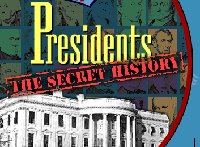
This is a neat "U.S. History for Kids" site from PBS. Check out the main page also, lots of ideas for educators and very professionally presented.
Subscribe to:
Posts (Atom)